
Hi folks,
Some good points being made.
The desire of owners and thus the mandate for trainers is to get the horses ready early. You can credentialize a horse (especially a stallion prospect) more easily if they can run well at 2 when they're competition isn't as deep.
Another component is the expansion of 2yo sales and the need to prepare young stock to display extreme speed at a very early age (generally February to April of their 2yo years) when most are chronologically no more than 24 months.
Texas, you guys in the Lone Star State start early. Generally yearlings are sent to farms to be broken sometime after they've been sold, but most aren't broken until they're 18-20 months, still young and for many intense training follows.
Louis, Kelso and Native Diver were geldings that weren't really pushed early (Native Diver was a SW at 2yo). Even later, Forego and John Henry raced long and well, so the key ingredient here was as much their inability to breed as their physique (that may have been a factor). 2yo racing in and of itself isn’t necessarily a problem, forcing youngsters to race at 2 is.
The idea of waiting on a horse is no longer acceptable to buyers paying large amounts for their stock. We hear of the high profile horses that don't last long, but there are still lots of horses that race on for years. I just retired 2 mares (in the last week) with 50 or more starts each.
Danzig has a reputation for NOT throwing his unsoundness, but if you look at the lifetime starts of his foals (in the database) you'll see that 25 starts is about the maximum for his get and that there are dozens and dozens with 1 to 3 starts, but they were relative unknowns (although many were expensive purchases). Since his high profile horses don’t go unsound – we don’t hear of it, it’s not in your face.
It's the high profile horses that go unsound that get the attention and those that do race well and stay sound are retired early because of their reproductive value (that often exceeds their potential value on the track).
Regards,
Pete
WHATS THE REASON ?
Moderators: Roguelet, hpkingjr, WaveMaster
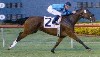
St. Louis kid, if you get a chance to visit Airdrie stud in Kentucky, you'll find horses of all shapes and sizes. The long lean ones are Harlan's Holiday, Friend's Lake, Proud Citizen, Include of the ones I've seen in person. The blocky are Forest Camp, Stormin Fever. And the mid-size compact athletic types are Yankee Victor and Mazel Trick.
Often you can guess how their weight is distributed by how many races they ran, and at what distances. The sprinters are often blocky and the distance horses more refined, the early-retired brilliant types are the blocky and the durable horses are lean. Many exceptions to the rule, however.
And the buying public has little patience with studs who were exceptional racehorses, but don't have precocious youngsters.
Often you can guess how their weight is distributed by how many races they ran, and at what distances. The sprinters are often blocky and the distance horses more refined, the early-retired brilliant types are the blocky and the durable horses are lean. Many exceptions to the rule, however.
And the buying public has little patience with studs who were exceptional racehorses, but don't have precocious youngsters.
Rocking H

Please pardon my half-informed musings, but this is a subject that really interests me. Steeplechase trainers say the primary reason their horses go on running into their teens is the year round racing - that their horses get time off, are not asked for speed in workouts, and that go on running into their teens. This seems to apply to the flat racers may of them run as well - all turf races, with the characteristic slower pace up front and a charge down the stretch.
Another thing that could play into that is that they keep their horses at the farm, since the meets travel - so they can turn the horses out out, and do, even when they are racing fit - to keep them sound in mind as well as body.
Of course, steeplechase horses break down too - they have the added stress of jumping/bad landings/falls over other horses. And well, let's face it, no one is beating down the door for their stud services, so their is less incentive to retire them early. But on the whole, from the horse's perspective it might be better to be a 'chaser than a sprinter.
With regards to spindle-legged horses, I have been told fine-boned horses often have denser bone - tending more towards the bone type of the desert horses from which they are descended, so they may not be as vulnerable as they look. The bulk issue could be a distinct contributing factor, though, particularly when you see Schartzenegger yearlings with immature joints. No wonder they have to be hothoused.
With regards to the two year old sales, how do you get around the market? Seems that as much as everyone wrings their hands, little is changing, except at an individual level. I do know a trainer who said she bought two-year olds straight from the training center - she had a chance to watch them closely, and that was the way to do it. But there is no incentive to anyone to promote that, except possibly someone who had a training center and could collect a commission. Is this more common than I realize?
Another thing that could play into that is that they keep their horses at the farm, since the meets travel - so they can turn the horses out out, and do, even when they are racing fit - to keep them sound in mind as well as body.
Of course, steeplechase horses break down too - they have the added stress of jumping/bad landings/falls over other horses. And well, let's face it, no one is beating down the door for their stud services, so their is less incentive to retire them early. But on the whole, from the horse's perspective it might be better to be a 'chaser than a sprinter.
With regards to spindle-legged horses, I have been told fine-boned horses often have denser bone - tending more towards the bone type of the desert horses from which they are descended, so they may not be as vulnerable as they look. The bulk issue could be a distinct contributing factor, though, particularly when you see Schartzenegger yearlings with immature joints. No wonder they have to be hothoused.
With regards to the two year old sales, how do you get around the market? Seems that as much as everyone wrings their hands, little is changing, except at an individual level. I do know a trainer who said she bought two-year olds straight from the training center - she had a chance to watch them closely, and that was the way to do it. But there is no incentive to anyone to promote that, except possibly someone who had a training center and could collect a commission. Is this more common than I realize?
hello hello
18-20 months is still too young... in my book... take your 10 year old kid out there and put high school football equipment on him and tell him to go out for a pass...laughing....
Look at Storm Cat and Secretariat... they have an even top line... so did Northern Dancer.. this trait is a requirement to be registered in any of the sport horse breeds..
Bold Ruler and Native Dancer has the predominate withers...
texas
18-20 months is still too young... in my book... take your 10 year old kid out there and put high school football equipment on him and tell him to go out for a pass...laughing....
Look at Storm Cat and Secretariat... they have an even top line... so did Northern Dancer.. this trait is a requirement to be registered in any of the sport horse breeds..
Bold Ruler and Native Dancer has the predominate withers...
texas
I STARTED OUT WITH NOTHING...
AND STILL HAVE MOST OF IT...
AND STILL HAVE MOST OF IT...
Drugs. God gave all mammals the ability to feel pain for a good reason--sometimes to warn of impending greater damage. When drugs mask their pain, horses run through it and create long term damage which cannot repair itself.
Then, breeders like some of us decide to breed to these drugged performers, sometimes inbreeding to them or other like types, and perpetuate the weakness for another generation. And so on....
The combination of the hard tracks, year round racing, demanding owners, brutal trainers and heartless vets on the weakened TB breed has taken its toll. It will not stop until drugs are completely banished.
Then, breeders like some of us decide to breed to these drugged performers, sometimes inbreeding to them or other like types, and perpetuate the weakness for another generation. And so on....
The combination of the hard tracks, year round racing, demanding owners, brutal trainers and heartless vets on the weakened TB breed has taken its toll. It will not stop until drugs are completely banished.
Hi All,
I think another factor that people have to consider is the competiveness of todays racing. I have looked at many win pictures which belonged to horsemen who ran horses fifty years ago. They had stakes wins at six furlongs in times of one thirteen, one twelve and change and etc. These horses were never trained to run the difficult times that a horse has to experience these days.
A dragster can only run a few times before you have to completely tear down and rebuild the engine. Sure your family wagon could run quarter miles all day for the rest of the year with no breakages, but you are not going to win any races.
Sincerely EK
I think another factor that people have to consider is the competiveness of todays racing. I have looked at many win pictures which belonged to horsemen who ran horses fifty years ago. They had stakes wins at six furlongs in times of one thirteen, one twelve and change and etc. These horses were never trained to run the difficult times that a horse has to experience these days.
A dragster can only run a few times before you have to completely tear down and rebuild the engine. Sure your family wagon could run quarter miles all day for the rest of the year with no breakages, but you are not going to win any races.
Sincerely EK
-
Regal Pleasure
- 2yo Maiden
- Posts: 75
- Joined: Wed Oct 20, 2004 3:52 pm
- Location: Washington
-
louis finochio
- Darley line
- Posts: 9181
- Joined: Wed Sep 22, 2004 5:21 am
- Location: Alhambra-Calif.
- Contact:
Average Starts
The sire and dam if both raced should have about 15 or more starts each. The Stallions progeny average-starts has declined sharply over the last 20 years. As breeders are looking to recoup their initial investment by breeding to speed sires. The sire lines that have stamina like Graustark, Grey Dawn II and Key to the Mint have taken a back seat in favor of the speed sires of today. Thats one of the reasons the stallions progeny average starts has declined over the last two decades.
Those without sin cast the first stone.
Louis Finochio
Louis Finochio
-
Regal Pleasure
- 2yo Maiden
- Posts: 75
- Joined: Wed Oct 20, 2004 3:52 pm
- Location: Washington
Re: Average Starts
louis finochio wrote:The sire and dam if both raced should have about 15 or more starts each.
Thanks. I was just curious. I just bought a mare that had 26 starts herself. Her sire had 41 and her dam had 57.
(Another of my mares had 35 starts.)
When looking for mares. Wouldn't it also be a good idea to look at the mares progeny number of starts?
-
louis finochio
- Darley line
- Posts: 9181
- Joined: Wed Sep 22, 2004 5:21 am
- Location: Alhambra-Calif.
- Contact:
Mares Progeny
Yes check the mares progeny average starts. If you find alot of unraced in the mares foals, it means unsoundness. You now have the figures to build on, good luck, breed and sound and talanted TB.
Those without sin cast the first stone.
Louis Finochio
Louis Finochio

I'm coming a little late to the party but I wonder how much the decline in the number of starts has to do with the difference in the way that the game is played today--and I'm not talking about medication or breeding but trainers. Back in the old days (60s), do you think any claiming trainer cared about his win percentage? The big stat was money won. A diligent handicapper could figure out how many wins out of how many starts but I don't recall that was a stat that DRF handed to you back then. Nowadays if any horseman isn't winning at at least a 10 % clip, they are a bum and 15 % is expected for a decent trainer.
Back then, claimers ran every week just to put money on the table and the stakes horses ran every other week because of the money to be had racing as opposed to breeding and because there was a culture that a good horse didn't duck. Not that there was any place to duck to--national level racing was concentrated in New York with an occasional or seasonal smattering in California, Chicago and Florida.
Now a horse can win a championship essentially off two or three races if one is a Breeders Cup race. New York has declined in overwhelming national importance and leaving town to face lesser horses to keep the win percentage up is the way business is done. Not that you can blame them--the national racing press is brutal on a good horse that loses and winning streaks like Cigars or Smartys are big news. It doesn't matter how the wins are put together--just put together wins and we will write about it favorably. (With a caveat, racing may have declined from its peak at the NYRA tracks because of the rise of the Breeders Cup but the media is still concentrated there. Azeri really didn't get respect from them I think until she ran in New York.)
Back in the 60s once a campaign of a good horse started, a horse would race 12 times and work maybe 5 or 6 times between starts. Now horses start 5 times and work 12-20 times. You can't lose in the morning.
Back then, claimers ran every week just to put money on the table and the stakes horses ran every other week because of the money to be had racing as opposed to breeding and because there was a culture that a good horse didn't duck. Not that there was any place to duck to--national level racing was concentrated in New York with an occasional or seasonal smattering in California, Chicago and Florida.
Now a horse can win a championship essentially off two or three races if one is a Breeders Cup race. New York has declined in overwhelming national importance and leaving town to face lesser horses to keep the win percentage up is the way business is done. Not that you can blame them--the national racing press is brutal on a good horse that loses and winning streaks like Cigars or Smartys are big news. It doesn't matter how the wins are put together--just put together wins and we will write about it favorably. (With a caveat, racing may have declined from its peak at the NYRA tracks because of the rise of the Breeders Cup but the media is still concentrated there. Azeri really didn't get respect from them I think until she ran in New York.)
Back in the 60s once a campaign of a good horse started, a horse would race 12 times and work maybe 5 or 6 times between starts. Now horses start 5 times and work 12-20 times. You can't lose in the morning.
EK wrote:Hi All,
I think another factor that people have to consider is the competiveness of todays racing. I have looked at many win pictures which belonged to horsemen who ran horses fifty years ago. They had stakes wins at six furlongs in times of one thirteen, one twelve and change and etc. These horses were never trained to run the difficult times that a horse has to experience these days.
I have an old American Racing Manual and it's facinating to look at the stats of the races from their inception. About 1945 or so, horses became suddenly and noticeably faster almost overnight. Wasn't it about that time that aluminum shoes came into use and the track maintenance became more than picking up errant horseshoes off the course? It would be nice to think that we are breeding faster horses than our grandfathers--could it be that we just have faster tracks?
-
louis finochio
- Darley line
- Posts: 9181
- Joined: Wed Sep 22, 2004 5:21 am
- Location: Alhambra-Calif.
- Contact:
Running Faster?
In the old days a TB would run just fast enough to win. When you study the pedigree's and conformation of TB years ago you will find sire lines that are extinct today. Today speed is the breeders goal, stamina has taken a back seat. Some of the old sire lines couldnt reproduce their self and have died out. You will find some of the older sire lines on the dams side of the pedigree's which will restore the soundness and balance out the speed sires.
Those without sin cast the first stone.
Louis Finochio
Louis Finochio
-
louis finochio
- Darley line
- Posts: 9181
- Joined: Wed Sep 22, 2004 5:21 am
- Location: Alhambra-Calif.
- Contact:
THE LATE MASTER OF CLAIRBOURNE
The late A. B. Bull Hancock, master of Clairbourne Farm in Ky. stressed two important points in his breeding program. 1. Bull believed in establishing family nicking patterns. 2. Breed away from unsoundness. Bull Hancock was a master breeder and a leading breeder in his time. We can learn many successful breeding patterns by doing are homework, as you must build a foundation before you build the house.
Those without sin cast the first stone.
Louis Finochio
Louis Finochio
-
mary syers
- Allowance Winner
- Posts: 267
- Joined: Mon Nov 01, 2004 7:30 pm