Grooming question
Moderators: Roguelet, hpkingjr, WaveMaster, madelyn

Grooming question
Ok, new horse owner here, so bear with me. I see all these pics of horses that are so nice looking. My guy is so furry, and not as sleak as these horses in shows. I know it's winter, but Fl is better warm, how do these people get these horses to look so good, and shine like that? Thanks

There are some additives to feed that will give them a shiny coat. Lots of people use plain old corn oil, ground flax seeds, black oil sunflower seeds. There are tons of commercial pelleted or powdered or liquid supplements you can buy. Calf Manna is one popular top dress that comes to mind. I use that, too.
Then, there are the external things used while grooming. Show Sheen is one popular spray-on product, although it should be used for manes and tails. Most of those types of things will clog their pores and keep them from sweating properly if applied directly to the coat. Not to mention the area beneath the saddle & pads!!! <slippage>
I am in Florida too, so I feel ya. I have one mare that grows a very shaggy coat even here. I call her my wooly mammoth!! My 2-month old foal also has his winter woolies.
Then, there are the external things used while grooming. Show Sheen is one popular spray-on product, although it should be used for manes and tails. Most of those types of things will clog their pores and keep them from sweating properly if applied directly to the coat. Not to mention the area beneath the saddle & pads!!! <slippage>
I am in Florida too, so I feel ya. I have one mare that grows a very shaggy coat even here. I call her my wooly mammoth!! My 2-month old foal also has his winter woolies.
Justice: When you get what you deserve.
Mercy: When you don't get what you deserve.
Grace: When you get what you don't deserve.
Mercy: When you don't get what you deserve.
Grace: When you get what you don't deserve.

Even in florida, I'd think that the slick horses that you are seeing are probably blanketed whenever temps go down into the low 60's and probably kept under lights. Otherwise even horses like TB's that often do not get good winter coats in any weather will grow somewhat fuzzy. There is a great deal of variation among individuals from what I've seen. There were two TBs at a clinic where I used to work that were kept at the hospital full-time as blood donors, and while they got some turnout, they mostly lived inside the heated barn and lighting that never varied. One grew fuzzy and seemed to shed out on the same schedule as a normal horses despite this, but the other stayed slick year round.
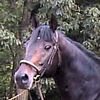
Yes, worming frequently helps an AWFUL lot. Also, you can throw a tiny scoop of flax seed in the feed.. Corn oil can help too.
Some horses have high natural resistance to parasites, and some have almost abnormally low resistance. I use Ivermectin, Pyrantel Pamoate and Fenbendazole. October is Praziqantel month at my farm..
Some horses have high natural resistance to parasites, and some have almost abnormally low resistance. I use Ivermectin, Pyrantel Pamoate and Fenbendazole. October is Praziqantel month at my farm..
So Run for the Roses, as fast as you can.....
Check to the feed you are feeding. I was buying bagged feed from the stores for my show horses. But when I got into racing, my trainer purchases from a mill. They mix what we want in it, oats, corn, flax seed oil, etc. I couldn't believe the difference in the hair coats of my show horses, just changing to better feed. And here is actually cheaper than any bagged feed. I will never go back. 
A great coat can also be helped along by lots of grooming. Follow your regular curry and medium hard brush with a brush called a body brush. I use a Stubben body brush with a strap that will wrap around my hand. Stroke the brush firmly on the horse in the direction of the hair...then wipe the brush on a curry (preferably metal) that you have in your other hand.
It is rather soothing to brush, scrape, brush. The scraping keeps the brush cleaner. You will also find that occasionally you have to tap the curry on your foot to get the dirt out of it.
As a groom in the past I almost hate to tell you how long we were required to body brush our charges.....up to two hours per horse! You don't need to go that far but a good twenty minutes on each side will help the coat immensely.
Follow the body brush work with a soft brush and a towel...again following the hair.
Your arms may take a while to get used to the extra work! Don't hesitate to apply pressure when using the body brush...except on the legs where gentleness is required.
Good luck!
It is rather soothing to brush, scrape, brush. The scraping keeps the brush cleaner. You will also find that occasionally you have to tap the curry on your foot to get the dirt out of it.
As a groom in the past I almost hate to tell you how long we were required to body brush our charges.....up to two hours per horse! You don't need to go that far but a good twenty minutes on each side will help the coat immensely.
Follow the body brush work with a soft brush and a towel...again following the hair.
Your arms may take a while to get used to the extra work! Don't hesitate to apply pressure when using the body brush...except on the legs where gentleness is required.
Good luck!
Proud Volunteer for the Finger Lakes Thoroughbred Adoption Program and Trainer Listings
www.fingerlakestap.org
www.fingerlakestap.org

I'm with Maunder - groom groom groom, curry curry curry. This can also do wonders for the horses' state of mind.
Also, I'm not a fan of corn oil, as most corn is now genetically modified. Flax seed, beet pulp, and rice bran are good alternatives.
WarHorse - a tree hugger.
Also, I'm not a fan of corn oil, as most corn is now genetically modified. Flax seed, beet pulp, and rice bran are good alternatives.
WarHorse - a tree hugger.
And thou fly without wings, and conquer without any sword. Oh, horse. - The Qur'an