Training off farm versus training at the track-
Moderators: Roguelet, hpkingjr, WaveMaster
Training off farm versus training at the track-
HI I would like some information on the pros and cons of training off farm and the track. Is it possible to train off the farm? Thank you for any response.
It can absolutely be done!! We do it!!
Our horses have always trained off of the farm and shipped in to race. They are turned out from 12 to 24/7 hours a day. However, it helps to have at least a 1/4 mile track to train on and be within an hour of a real track to work.
You can gallop in a field (I have done it myself and shipped in to work and race-under a trainer). I did all the prep work at home. The disadvantage to this is that you have to go fix all the tears every day in the field. Plus, if it rains you can't jog or gallop as it will tear even more. In the summer, it also gets rock hard. That's why, we ship our horses to a training farm now.
A guy in my state has trained on a 1/4 mile track and has a bunch of stakes winners. He ships in once or twice a week for speed work. However, once your horse is race fit you don't have to ship in as much.
I wouldn't go with the "Backyard Racehorse" methods becuase I think she needs more consistency and speed work. Not every horse can gallop only 3 days a week and be race fit.....
On the farm, it is more relaxed. A lot of track horses get ulcers. Also, they develop vices and stock up becuase their movement is restricted. It takes them more time to heal because of this. Plus, I think it is outright cruel but that is another can of worms...
We are going to try a trainer at Fair Hill this fall. We have never used this trainer before so we will see how it goes!
A lot of the off the farm trainers have small strings so your horse will get more hands on/individual care. Our trainers are great like that. Once when one of our horses smashed his leg in the gate, she drove him, by himself, over 2 hours to swim him 5 days a week!
At a good farm, the horse will have the same care as it would with a good track trainer. There are bad track trainers and bad farm trainers and vice versa.
Go and look at the trainers horses. Are they healthy, fit, and happy? Ask about her daily routine. Does she chart their training and management practices? Are they sound? Do they use drugs? Do the horses seem comfortable? You know, when we visit our trainers who are at farms you can walk down the aisle and pet the horses (if they are not turned out). However, try to do that with the track horses and your arm will get ripped off!! It's not the horse being mean it's them being confined.
If you need to find a good trainer off the farm,I can e-mail you the ones we have worked with.
Good luck and don't let people tell you it can't be done!!!
Our horses have always trained off of the farm and shipped in to race. They are turned out from 12 to 24/7 hours a day. However, it helps to have at least a 1/4 mile track to train on and be within an hour of a real track to work.
You can gallop in a field (I have done it myself and shipped in to work and race-under a trainer). I did all the prep work at home. The disadvantage to this is that you have to go fix all the tears every day in the field. Plus, if it rains you can't jog or gallop as it will tear even more. In the summer, it also gets rock hard. That's why, we ship our horses to a training farm now.
A guy in my state has trained on a 1/4 mile track and has a bunch of stakes winners. He ships in once or twice a week for speed work. However, once your horse is race fit you don't have to ship in as much.
I wouldn't go with the "Backyard Racehorse" methods becuase I think she needs more consistency and speed work. Not every horse can gallop only 3 days a week and be race fit.....
On the farm, it is more relaxed. A lot of track horses get ulcers. Also, they develop vices and stock up becuase their movement is restricted. It takes them more time to heal because of this. Plus, I think it is outright cruel but that is another can of worms...
We are going to try a trainer at Fair Hill this fall. We have never used this trainer before so we will see how it goes!
A lot of the off the farm trainers have small strings so your horse will get more hands on/individual care. Our trainers are great like that. Once when one of our horses smashed his leg in the gate, she drove him, by himself, over 2 hours to swim him 5 days a week!
At a good farm, the horse will have the same care as it would with a good track trainer. There are bad track trainers and bad farm trainers and vice versa.
Go and look at the trainers horses. Are they healthy, fit, and happy? Ask about her daily routine. Does she chart their training and management practices? Are they sound? Do they use drugs? Do the horses seem comfortable? You know, when we visit our trainers who are at farms you can walk down the aisle and pet the horses (if they are not turned out). However, try to do that with the track horses and your arm will get ripped off!! It's not the horse being mean it's them being confined.
If you need to find a good trainer off the farm,I can e-mail you the ones we have worked with.
Good luck and don't let people tell you it can't be done!!!
-
wallinga
- Restricted Stakes Winner
- Posts: 768
- Joined: Sun Oct 22, 2006 9:41 pm
- Location: Sydney, Australia
You can grade a gallop out of a paddock with a harrow and install all the necessary mod cons at the farm relatively cheaply. then it's a matter of topping the horses off at the track. It depends what type of horse you're training as well. Long relaxed gallops will get a horse over a bit more ground but sap a little speed.
-
louis finochio
- Darley line
- Posts: 9181
- Joined: Wed Sep 22, 2004 5:21 am
- Location: Alhambra-Calif.
- Contact:
-
Maureen

- Allowance Winner
- Posts: 464
- Joined: Sat Jan 01, 2005 10:48 am
- Location: Ontario. Canada
- Contact:
I have chosen to do this for the first time this season. I am happier, the filly is happier. The filly gets lots of turnout, is super fit because she is being worked at least three go rounds of the 5/8 track six days a week and gets worked out of a three stall starting gate as well. She loves her job this year. We ship into Woodbine for our recorded works and will be entering for her first start of the season next week.
-
crazy canuck
- Weanling
- Posts: 34
- Joined: Tue Feb 27, 2007 12:40 pm
pokeyman wrote:I wouldn't go with the "Backyard Racehorse" methods becuase I think she needs more consistency and speed work. Not every horse can gallop only 3 days a week and be race fit.....
!!!
I am a big fan of the "Backyard Racehorse" book but I agree with you about the speed element.
My question is, if you do all the work at the farm yourself and then ship in to the track, how do you find a trainer there who would be willing to work with you on such an arrangement. In another forum somewhere (I can't remember), I read that it was extremely difficult to find such a trainer. And what would the compensation for the trainer be?
I would guess just about anything would be better than what the track trainers seem to do (at least at PRM) where they gallop a horse for weeks and weeks, let them out for 1 furlong, then start working them 3 furlongs once a week and call it good.... boggles my mind how any horse makes it to the races with THAT kind of training.... No other athlete would ever be competitive (or they would just be injured) if they trained in this type of manner for whatever sport they are trying to succeed in.
Off the farm
Hi Dilly,
We've got a small string that we ship off the farm to race from NY to VA.
The program works well for our horses, for many reasons: turnout and cross-training opportunities being the two biggest. We've had mostly turfers as well, so access to hundreds of acres of grass gallops, along with a 5/8ths dirt track, trails through the woods, etc., keeps the horses interested and guessing what new thing they'll do for work every day. They're never bored! Some horses are much happier with turnout facilities, especially with other horses. They're highly socialized as a result, which is far different from having a backside home. Most horses do well in a farm environment, but there are cases where horses are happier with the more rigid structure and solitary life at a racetrack. It really just depends on the individual.
The other plus is that horses learn to ship well, because they have to! Ours are vanned starting early, so they get over the fear of it and worry associated with long hauls. Good luck with yours!
We've got a small string that we ship off the farm to race from NY to VA.
The program works well for our horses, for many reasons: turnout and cross-training opportunities being the two biggest. We've had mostly turfers as well, so access to hundreds of acres of grass gallops, along with a 5/8ths dirt track, trails through the woods, etc., keeps the horses interested and guessing what new thing they'll do for work every day. They're never bored! Some horses are much happier with turnout facilities, especially with other horses. They're highly socialized as a result, which is far different from having a backside home. Most horses do well in a farm environment, but there are cases where horses are happier with the more rigid structure and solitary life at a racetrack. It really just depends on the individual.
The other plus is that horses learn to ship well, because they have to! Ours are vanned starting early, so they get over the fear of it and worry associated with long hauls. Good luck with yours!
When I was galloping myself, I found 4 trainers to work with me-one in NY and three in MA.
If you call the racing office and tell them you are looking for a trainer with a small string to saddle your horse for works and races they may be able to give you some leads.
I paid the NY trainer $100 for races and you have to pay the groom too.
I paid the MA trainers $25 to $50 for works.
Make sure you have your horse fit! Show up with wraps (applied correctly) and a shining, bouncy horse. I brought my own stall guard, buckets, hay, etc and a leather halter with his name. I made sure my tack was clean. My horse was well groomed with trimmed/shod appropriately. It just shows that you have attention to detail and are professional.
Be prepared to pay the exercise rider as well- I gave $20 as it's hard to find a good rider to work with you because they associate with whole barns and trainers that way.
Also, bring your own bathing supplies and bathe and cool out the horse yourself. I try to take up as little as the trainers time as possible.
The trainer should run his hands over your horse's legs and back. He should watch him jog for soundness BEFORE putting a rider up.
If you are galloping in a field, I found when they get to the track it is harder for them. So, If I am galloping 1 1/2 miles at home (not including warm up, cool down) then I would cut that back to a mile on the dirt.
Also, I kept a daily training log of everything I did including heart rate averages. A heart rate monitor that does laps was the best purchase I ever made. He would gallop and act like he was dying but I would check my watch and see that his heart rate was in the 90's (low) and kick him on! He figured out quick that I could tell and stopped being lazy! You can't blame h9im for trying though!! It really is much easier with the monitor to judge your horse's fitness. You can't always go by how fast they recover or how much they drink. I would bring this with me and show it to the trainer.
Also jog for warmp, do a slow lap, and do your conditioning gallop, and cool down. However,as you get closer to going to the track do small speed bursts as your galloping area allows.
We had to ship to the track 2 times a week for strong dirt gallops for awhile before we worked. They just can't get as fit galloping on the grass.
So far, all the trainers we worked with wanted to gallop our horse a few times and get feedback on his condition BEFORE they agreed to work him. So, be prepared to be patient and ship in for strong gallops and maybe a 2 minute lick before getting an actual work on your horse.
Also, I know the trainer's I have worked with wanting the horse to have gate experience. You can send your horse to a farm that backs 2 year olds and have them do gate work for a few weeks.
Trainers don't want to be reponsible for your horse as they don't stand to gain much becuase most of their money comes from the day rate.
They also don't want to work and race a horse who is a dog because it embarrasses them and makes them look bad.
You give the trainer 10% of your winnings and the jockey gets 10% too.
Remember, if they saddle them they are responsible and you are working off of their insurance. So, they don't want to take a dumpy horse who is in poor condition.
Hope this helps!!!!
It can be done! However, it IS time consuming. Good luck!
If you call the racing office and tell them you are looking for a trainer with a small string to saddle your horse for works and races they may be able to give you some leads.
I paid the NY trainer $100 for races and you have to pay the groom too.
I paid the MA trainers $25 to $50 for works.
Make sure you have your horse fit! Show up with wraps (applied correctly) and a shining, bouncy horse. I brought my own stall guard, buckets, hay, etc and a leather halter with his name. I made sure my tack was clean. My horse was well groomed with trimmed/shod appropriately. It just shows that you have attention to detail and are professional.
Be prepared to pay the exercise rider as well- I gave $20 as it's hard to find a good rider to work with you because they associate with whole barns and trainers that way.
Also, bring your own bathing supplies and bathe and cool out the horse yourself. I try to take up as little as the trainers time as possible.
The trainer should run his hands over your horse's legs and back. He should watch him jog for soundness BEFORE putting a rider up.
If you are galloping in a field, I found when they get to the track it is harder for them. So, If I am galloping 1 1/2 miles at home (not including warm up, cool down) then I would cut that back to a mile on the dirt.
Also, I kept a daily training log of everything I did including heart rate averages. A heart rate monitor that does laps was the best purchase I ever made. He would gallop and act like he was dying but I would check my watch and see that his heart rate was in the 90's (low) and kick him on! He figured out quick that I could tell and stopped being lazy! You can't blame h9im for trying though!! It really is much easier with the monitor to judge your horse's fitness. You can't always go by how fast they recover or how much they drink. I would bring this with me and show it to the trainer.
Also jog for warmp, do a slow lap, and do your conditioning gallop, and cool down. However,as you get closer to going to the track do small speed bursts as your galloping area allows.
We had to ship to the track 2 times a week for strong dirt gallops for awhile before we worked. They just can't get as fit galloping on the grass.
So far, all the trainers we worked with wanted to gallop our horse a few times and get feedback on his condition BEFORE they agreed to work him. So, be prepared to be patient and ship in for strong gallops and maybe a 2 minute lick before getting an actual work on your horse.
Also, I know the trainer's I have worked with wanting the horse to have gate experience. You can send your horse to a farm that backs 2 year olds and have them do gate work for a few weeks.
Trainers don't want to be reponsible for your horse as they don't stand to gain much becuase most of their money comes from the day rate.
They also don't want to work and race a horse who is a dog because it embarrasses them and makes them look bad.
You give the trainer 10% of your winnings and the jockey gets 10% too.
Remember, if they saddle them they are responsible and you are working off of their insurance. So, they don't want to take a dumpy horse who is in poor condition.
Hope this helps!!!!
It can be done! However, it IS time consuming. Good luck!
fletch621 wrote:Pokeyman, do you have a URL for the heartrate monitor you use? Or to the company that makes them? Thanks.
I used the Polar Equine S-610i-$399.95.
However, you can probably get a used one. I used it for conditioning my Arabian endurance prospect as well....
The one I got had a software download program, etc....
Google Polar Equine Heart rate Monitor.
Cool, thanks... here's a link to the product if anyone else is interested... http://www.heartmonitors.com/horse/polar_horse_s610.htm I gotta say this is the ONLY sport I have ever heard of where trainers normally don't care about heart rate (which leads me to believe most trainers don't know what the hell they are doing) which is critical to proper training.
Edit: removed period from end of URL.
Edit: removed period from end of URL.
Thank you for the advice. We are new to thoroughbred racing and we have found that this is a hard sport to break into. We want to do what is best for our horse because after all it is about the horse and we love horses which is why we got into this sport. When we took our horse off the track and to our farm we have gotten alot of negative responses about this. But after 6 weeks being on the farm she finally broke her maiden. She seems happier and more relaxed. When we brought her home she had to be treated for ulcers and walked the stall constantly. Once she was able to be turned out she settled right down.
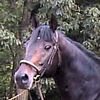
I think, as denise said, it depends on the horse. I sent our Skip Away to the track because he is such a nervous nellie I think he needs to be bombarded a bit. And he needs the experience of the real deal. He is at a smaller, quieter track (not Churchill) but the environment is there.
So Run for the Roses, as fast as you can.....